New Planning Laws: What Ireland's 2024 Exemption Rules Mean for Modular Cabins
Ireland's updated planning exemption rules have opened the door for homeowners to add modular structures to their gardens without full planning permission. Here's everything you need to know.
Looking for the full picture? Read our planning permission guide.
A Game-Changer for Irish Homeowners
Ireland's planning exemption regulations were updated in 2024 and significantly overhauled in 2026. The rules now cover two distinct rear-garden exemptions: a general garden-structure exemption for sheds, home offices and garden rooms up to 30m² ancillary to the main dwelling, and a Class 3A Detached Auxiliary Dwelling exemption for a detached auxiliary dwelling of 32–45m² in the rear garden of a principal house. Always check the current status of these rules before you build — conditions apply and individual circumstances vary.
What the Rules Allow
Under the exempted development regulations, a modular structure in your garden may be exempt from planning permission provided all of the following conditions are met:
- Floor area: The structure must not exceed the exempted limit (up to 30m² for a general garden structure, or 32–45m² for a Class 3A detached auxiliary dwelling)
- Height restrictions: The structure must remain below a defined roof height (generally 2.4m at boundaries, up to 3m elsewhere, 4m for pitched roofs)
- Setback from boundaries: It must maintain a minimum distance from the site boundary
- Ancillary use: A general garden structure must be ancillary to the main dwelling — used in connection with the house, by the same household. A Class 3A dwelling must be occupied in conjunction with the principal house.
- 25m² of private garden space must remain after construction
The critical catch: ancillary vs. independent use
The single most misunderstood point is this: a garden structure that is ancillary to the main house — used as a home office, gym or studio by the same household — can be exempt. But the moment it is occupied independently, rented out, or used as a separate self-contained dwelling (outside the Class 3A conditions), it becomes unauthorised development requiring planning permission.
A garden pod built for a home office is fine. The same pod rented on Airbnb or occupied by a paying tenant almost always needs planning permission.
The 32–45m² Class 3A Auxiliary Dwelling Exemption (In Force from 27 July 2026)
Under S.I. No. 340 of 2026 (signed 16 July 2026, in operation from 27 July 2026), a detached auxiliary dwelling of 32–45m² in the rear garden of an owner-occupied principal house may be exempt from planning permission — subject to strict conditions. The exemption is time-limited: it applies only to development commenced and completed between 27 July 2026 and 31 December 2030.
The exemption does not remove the following obligations:
- Building Regulations still apply — fire safety, structure, energy performance (NZEB), ventilation, drainage and accessibility. There is no exemption from building standards for a residential structure.
- A Commencement Notice must be filed with your local authority before work starts.
- A BER certificate (A2 or better) is required before occupation.
- Independent use or rental may still need planning permission — the exemption is built around ancillary occupancy; renting out the unit as a separate dwelling may still require a change of use.
- Short-term letting (Airbnb, holiday rentals) is explicitly prohibited under the Class 3A exemption.
- Protected areas — conservation areas, protected structures and apartment buildings may be excluded.
What This Means in Practice
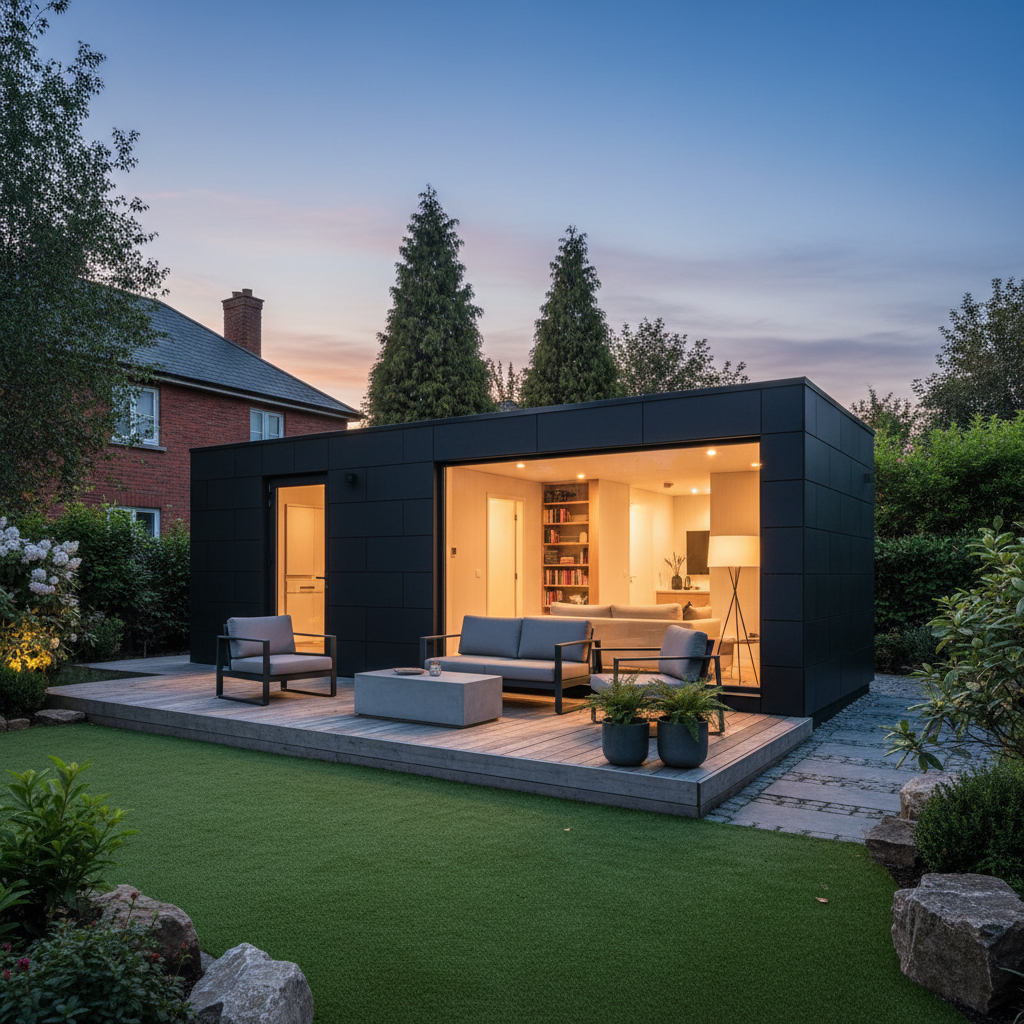
For a garden office, gym or studio up to 30m² that is ancillary to the main dwelling, the general garden-structure exemption generally applies — and a Chapter Two garden studio pod or a Garden Room can be installed without planning permission, provided all conditions are met.
For a larger detached auxiliary dwelling (32–45m²) in the back garden, the Class 3A exemption may apply — but you must still meet Building Regulations, file a Commencement Notice, obtain a BER certificate, and ensure the use remains ancillary. Always confirm the current position before proceeding.
What Still Requires Planning Permission
Planning permission is still required if:
- The structure is intended to be used as a separate self-contained dwelling (unless the Class 3A 32–45m² exemption applies and all conditions are met)
- The total floor area exceeds the exemption threshold
- The site is in a protected structure zone or conservation area
- The unit is to be rented out independently or used for short-term letting
- The principal house has already been subdivided into separate homes
Verify Before You Build
Planning rules and exemption regulations can change. Before starting any project, verify the current requirements with your local planning authority or a qualified planning consultant. The information in this article is general and should not be relied on as a substitute for professional advice.
For the most up-to-date and comprehensive guidance, see our Planning Permission Ireland: The Complete 2026 Guide and our dedicated 45m² Planning Exemption Guide.
Our Advice
Get in touch with the New Chapter Homes team today for a free site assessment and planning guidance. We confirm exemption eligibility for every site during the free site survey, and we handle Building Regulations compliance, Commencement Notices and BER certification as part of our turnkey service.
Explore New Chapter Homes
- Garden Pods Ireland — Garden pods and garden rooms
- Planning Guide — Planning permission and exemptions explained
- 45m² Planning Exemption Guide — The complete homeowner's guide to the 45m² exemption
- Planning Permission Ireland: The Complete 2026 Guide — Our main planning authority article
- Get in Touch — Book a free site survey today
Explore Our Modular Homes
Related Articles

Do You Need Planning Permission for an Outdoor Kitchen in Ireland?
Outdoor kitchens are usually exempt from planning permission in Ireland, but the rules matter. Here is what the Planning and Development Act exemptions mean for your garden kitchen.
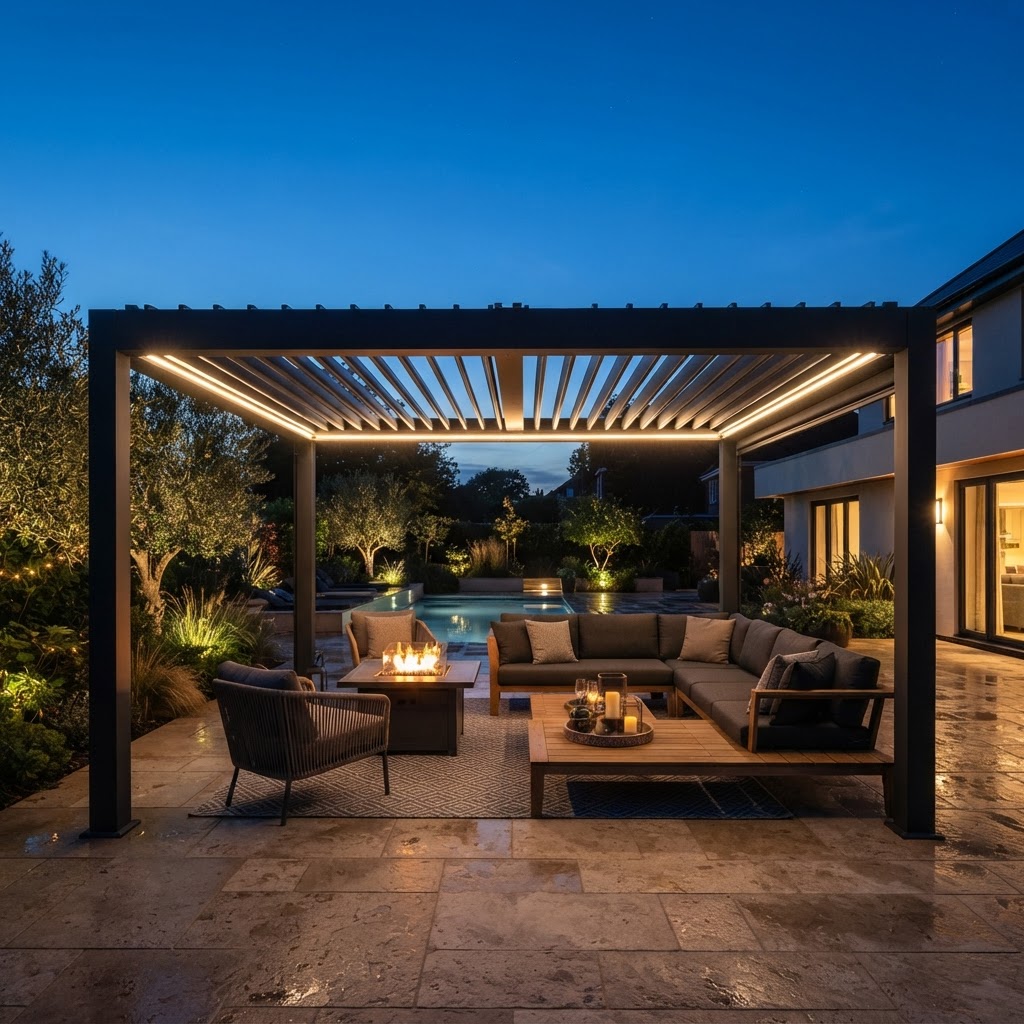
Do Pergolas Need Planning Permission in Ireland?
Do you need planning permission for a pergola in Ireland? The answer depends on the size, height, location and specifics of your project. We explain the key considerations and why a blanket answer is not possible.
The 45m² Planning Exemption in Ireland: What It Means for Garden Modular Homes
The Class 3A 32–45m² planning exemption for modular homes in Irish back gardens explained — what it covers, what it doesn't, and what you still need to do before you build.
Ready to Start?
Talk to Our Team Today
Get expert advice, a free consultation, and a tailored quote for your project.
Get in Touch