Modular Home Wastewater Treatment Regulations Ireland: Rural Sites 2025
Building a modular home on a rural Irish site? You'll need a compliant wastewater treatment system. Here's what the 2025 EPA Code of Practice requires for septic tanks and treatment units.

Looking for the full picture? Read our complete guide to modular homes in Ireland.
Wastewater Treatment for Rural Modular Homes
If you're building a modular home on a rural Irish site without access to mains sewerage, you must install a compliant on-site wastewater treatment system. This is regulated by the EPA Code of Practice: Wastewater Treatment and Disposal Systems Serving Single Houses (2021, updated 2025) — and it's one of the most scrutinised aspects of rural planning applications.
Do You Need Planning Permission for the Treatment System?
Yes — if your modular home requires planning permission, the wastewater treatment system is part of that application. The local authority will assess:
- Site suitability — percolation tests, subsoil conditions, water table level.
- System type — septic tank, secondary treatment unit, or tertiary treatment.
- Polishing filter — the area where treated effluent is discharged to ground.
- Setback distances — minimum distances from wells, watercourses, and boundaries.
The 2025 EPA Code Updates
The updated Code of Practice (2025) brought several changes:
- Stricter site assessment — more comprehensive percolation testing (T-test and P-test).
- Minimum site size — 1,800m² (approximately 0.44 acres) for a single house with a septic tank and percolation area.
- Improved setback distances — increased minimum distances from drinking water wells (now 25 metres minimum, 60 metres recommended).
- Secondary treatment preferred — in marginal sites, a secondary treatment unit (e.g., biofilter or constructed wetland) may be required rather than a basic septic tank.
- Maintenance agreements — treatment units must have a documented maintenance contract.
Percolation Tests: The Make-or-Break Factor
Before you buy a rural plot for a modular home, commission a site suitability assessment (percolation test). This determines whether the ground can absorb treated effluent. The test involves:
- T-test — assesses subsoil permeability at the depth of the percolation area.
- P-test — assesses the percolation rate of the topsoil/subsoil.
If the ground fails the percolation test, you may need a secondary or tertiary treatment system — significantly more expensive — or the site may be unsuitable for a dwelling entirely.
Setback Distances (2025 Minimums)
| Feature | Minimum Distance | |---|---| | Drinking water well (yours) | 25m (60m recommended) | | Watercourse (stream, river) | 10m | | Lake or shoreline | 50m | | Site boundary | 3m | | Dwelling (yours or neighbour's) | 7m |
Types of Treatment Systems
- Septic tank + percolation area — the traditional, simplest option. Works on good percolation sites.
- Secondary treatment unit (e.g., biofilter, rotating disc) — for sites with moderate percolation. Treats effluent to a higher standard before discharge.
- Tertiary treatment (e.g., reed bed, sand filter) — for poor percolation sites or sensitive areas (near lakes, in drinking water protection areas).
How This Affects Your Modular Build
The wastewater system is installed during site preparation — before your modular home arrives. This is one of the first things we assess during your free site survey. If the site needs planning, we include the wastewater design in the application.
Cost Expectations
- Septic tank + percolation area: €4,000–€7,000
- Secondary treatment unit: €7,000–€12,000
- Tertiary treatment system: €12,000–€20,000+
These costs are in addition to the modular home itself. Factor them into your budget early.
Contact New Chapter Homes for a rural site assessment — we'll evaluate your plot's wastewater options.
Explore Our Modular Homes
Related Articles
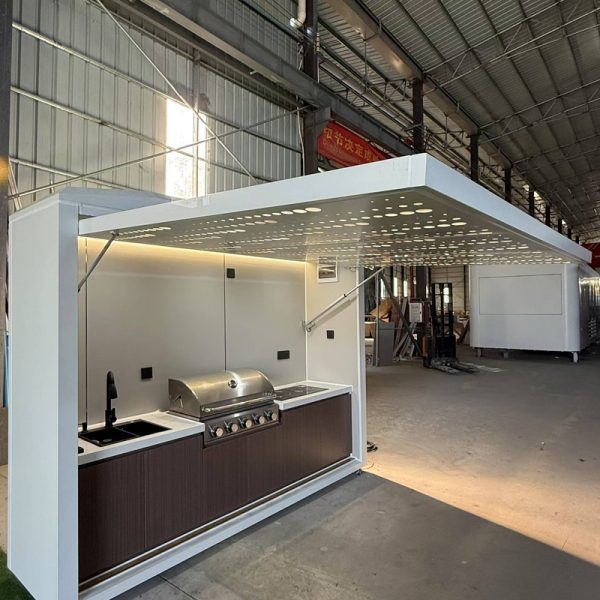
Do You Need Planning Permission for an Outdoor Kitchen in Ireland?
Outdoor kitchens are usually exempt from planning permission in Ireland, but the rules matter. Here is what the Planning and Development Act exemptions mean for your garden kitchen.

Do Pergolas Need Planning Permission in Ireland?
Do you need planning permission for a pergola in Ireland? The answer depends on the size, height, location and specifics of your project. We explain the key considerations and why a blanket answer is not possible.
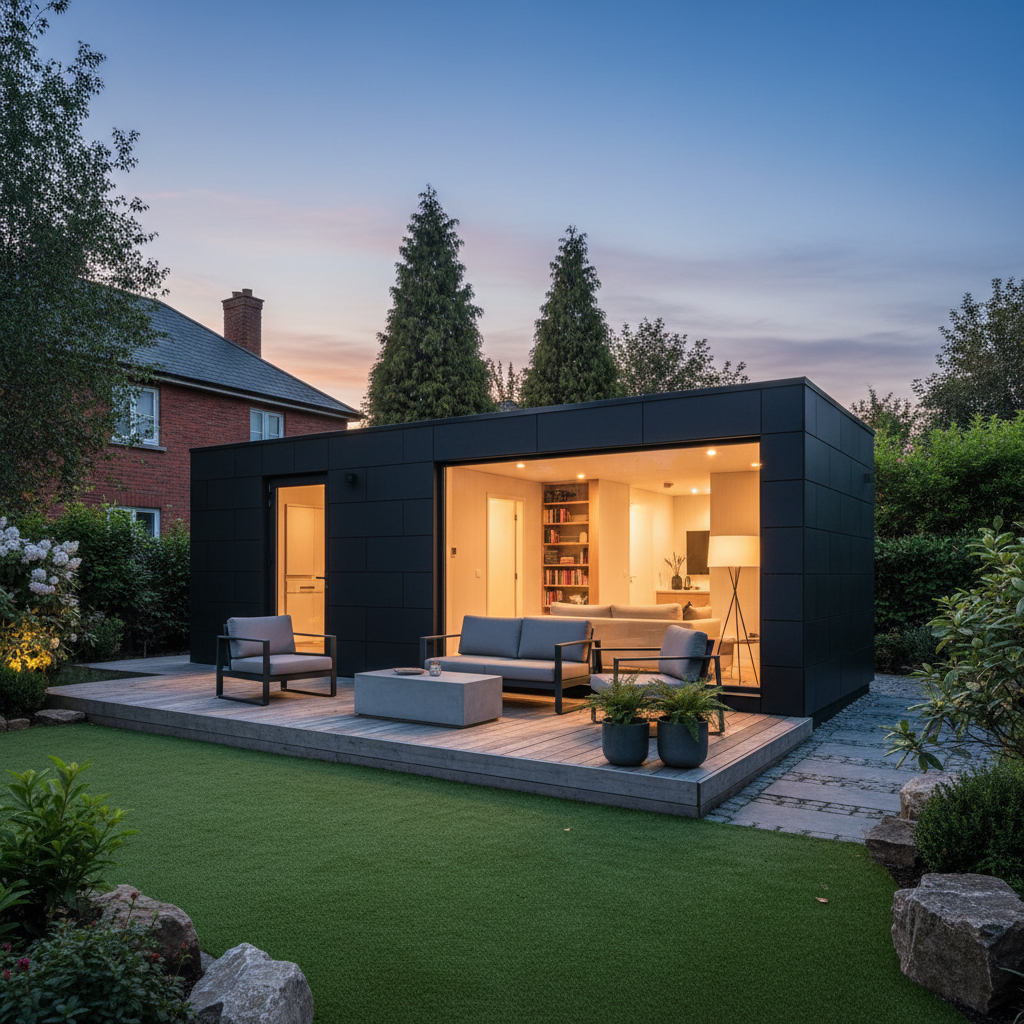
The 45m² Planning Exemption in Ireland: What It Means for Garden Modular Homes
The Class 3A 32–45m² planning exemption for modular homes in Irish back gardens explained — what it covers, what it doesn't, and what you still need to do before you build.
Ready to Start?
Talk to Our Team Today
Get expert advice, a free consultation, and a tailored quote for your project.
Get in Touch